A common theme that we can see in global health is the role that vaccine accessibility plays in preventing diseases. There are so many countries that are suffering epidemics of diseases that we rarely see in the Western hemisphere, and this has everything to do with healthcare disparities. I actually think that we take vaccines for granted and once you start researching how they are affecting countries that don’t have access to them it’s like falling down a rabbit hole. It is a very important rabbit hole to fall into, though, and I am sure that Dr. Cramer would urge each of us to continue looking into the epidemiological side of microbiology, as we don’t cover it too deeply in class. Some specific examples of underrated vaccines that I am going to discuss in my blog are: the MMR vaccine and the pertussis vaccine.
The measles, mumps, and rubella, or MMR, vaccine is actually coming to be my favorite vaccine. It is administered once and then just like that, you are protected against three potentially fatal diseases. As part of the routine vaccine roster for children, it offers protection and when taken properly can protect an entire community from outbreaks. Unfortunately, though, there is a rising anti-vaxx campaign that is causing a rise in MMR incidence in the US, which is like a small preview of what countries lacking access to this vaccine go through. Thankfully there are numerous efforts worldwide aimed at alleviating the spread of these viruses, specifically in impoverished countries. There is currently a measles and rubella campaign that is underway and looking to vaccinate over 45 million children in 7 countries against MMR viruses (Mahase, n.p.). This initiative started as a means to combat the rising rates of measles and rubella, which reached over 400,000 cases in 2019, according to the World Health Organization. So as you can see, vaccination is key because eradicating these preventable diseases starts with preventing them, and that is why vaccines are like a gold mine!
Another disease that we don’t hear much about is pertussis, aka whooping cough. This is yet another completely preventable disease that is popping up over the US as a result of improper vaccination practices. There are some specific communities in the US that are feeling the effects, specifically Lake County in Illinois, with 212 reported cases of whooping cough in 2019 (Coleman, n.p.). Again, there should not be such a high number of cases, as the diphtheria, tetanus, pertussis, or DTaP, vaccine (arguably just as cool as the MMR vaccine) is available for preventing this bacterial infection. The “aP” part of this vaccine is acellular Pertussis, which is a subunit vaccine that consists of key protein antigens against pertussis. The recommendation being made to Lake County and those surrounding it is to keep their vaccinations up to date (Coleman, n.p.).
As you can see, neglecting vaccines when they are readily available is irresponsible because it puts individuals such as young children or those who are immunocompromised at risk. It is extremely frustrating to witness a misguided and misinformed anti-vaccination group growing in the US when there are people who are not as lucky to be able to protect themselves and their children from preventable diseases. To end, vaccines are miracles, please don’t neglect them (feel free to spread the word).
Along with the research that I had to perform for this blog post, I also had to do some research about what exactly Poliomyelitis is (the only thing that came to mind prior to said research was Franklin D. Roosevelt). The most striking effect of the virus is the paralytic effect, as many frequently become paraplegic due to the nerve damage that the virus causes. The reason for my limited knowledge on the virus and disease is likely the same for most Americans. Polio has been eradicated in the United States by effective vaccine administration, so it is not a public health threat in the US, so it is no surprise that it’s not the talk of the town in the US. This is not the case for several other countries, though, including Pakistan , Nigeria, and, recently, the Philippines. This is due to the fact that polio vaccines are less accessible in impoverished countries and in countries with poor health systems.
As we learned in MCRO 251, there are two polio vaccines available: inactivated polio vaccine, or IPV, and oral polio vaccine, or OPV. Both are effective at providing immunity against the virus, but there are some distinct advantages and disadvantages to each. OPV is both cheaper and better at preventing the spread of the virus, while still providing immunity. This is because polio virus can be spread through feces and OPV, which is administered orally, stimulates the cells in your throat and gut to produce antibodies against it, so if polio virus were to enter a person, the mucosal antibodies would eliminate it before it entered the cells and replicated, also eliminating the possibility of orofecal transmission. IPV on the other hand, does not confer mucosal immunity, so although the individual is protected, the virus can still replicate in the throat and intestines, and thus it can still be spread to others. IPV also requires multiple doses. So, it sounds like OPV is better, right? Well, OPV consists of attenuated virus strains, so they are able to mutate and cause cases of Poliomyelitis, which is why it is no longer used in the US. In other countries, though, it is widely used, as it is the cheaper and more accessible option.
In some African countries, specifically, OPV is used over IPV and it has even been determined that in some, there are more cases of vaccine-derived polio than those infected by wild-polio viruses. There have been at least nine new cases of vaccine-derived polio spread across four countries (Mohamed, n.p.). Although there are initiatives to eradicate the virus in endemic countries, a lot of people are calling for the development of a safer, more accessible vaccine for these countries that are suffering from high rates of vaccine-derived polio and for those that are seeing low immunization rates due to inaccessible vaccines (Mohamed, n.p). But how is this going to get done? At the end of 2019, $2.6 billion was raised by global leaders and philanthropists to aid the polio eradication efforts. This money is being used by the Global Polio Eradication Initiative (GPEI) to reach children with the vaccine and to overcome other barriers that prevent immunization, be it reluctant parents or conflict within the country (World Health Organization). Two of the biggest targets for the GPEI campaign will be Pakistan and Afghanistan, which are now the only two countries experiencing endemic wild-polio. The campaign hopes to eradicate polio by 2023.
It is very interesting to see the healthcare disparities in the world and how little people, including myself unfortunately, know about them. It is crazy to think that the virus is still an issue in some countries when it has been eradicated in the US since 1979. The same goes for other diseases too, like measles, mumps, and rubella. As microbiologists, it is just as important to know about how viruses and bacteria affect different communities, epidemiology, that is, as it is to know the specific mechanisms they use to infect. Looking at it from an epidemiological perspective though, brings about so many other potential areas of analysis, like making healthcare, in general, accessible to everyone, or the history behind why some populations/communities are not being given the same sense of urgency as others. I will also end by saying that Polio is a perfect example of how important awareness is because awareness makes people realize how urgent and fixable these things are, and that is when foundations like GPEI are established and people fight for those that do not have the same healthcare systems first world countries.
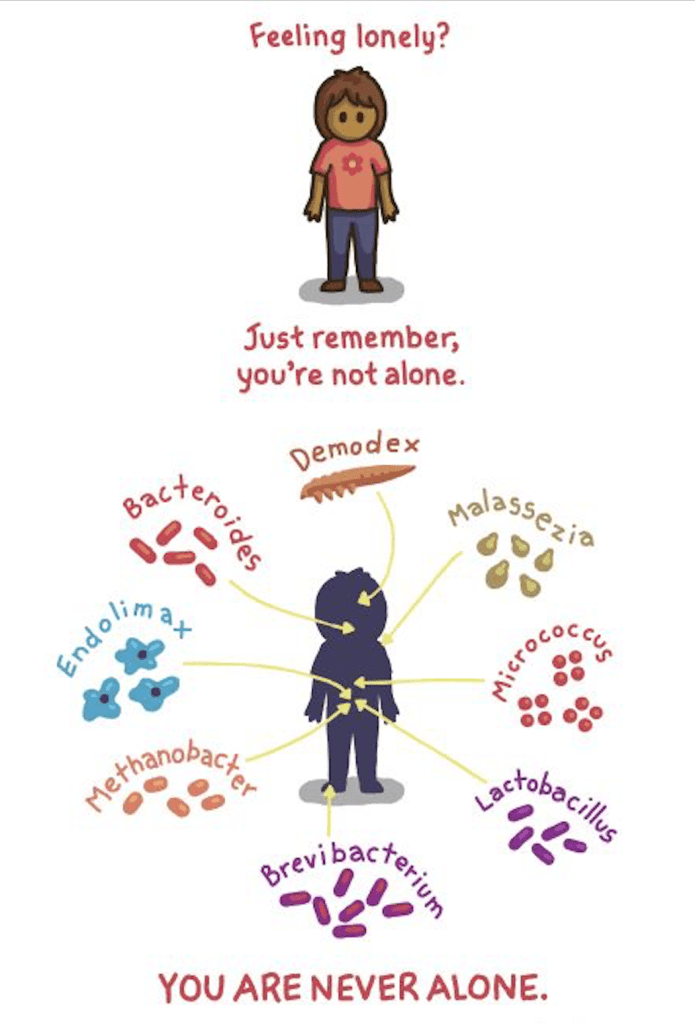
As we learn about bacteria and viruses pathogenic to humans, it is also important to consider the human microbiome. Studies are beginning to reveal connections between these communities of microorganisms inside our bodies and both human health and disease. The microbiome role in human disease was first introduced to me in Microbiology on the first day of class, where Dr. Cramer discussed a study linking the bacteria Porphyromonas gingivalis to citrullination of proteins, and possibly autoimmune diseases. P. gingivalis, is just a single microorganism though, and when you study the human microbiome, it is important to consider the interactions between the many different organisms that it consists of. Based on the number of studies that I came across in my research, I believe that there is a great deal we can learn about the human body from studying the microbiomes, even possible treatment and prevention methods for some very serious diseases.
Keeping with the Alzheimer’s link, there are several groups studying exactly how the microbiome may be involved in neurodegenerative diseases like Alzheimer’s, Parkinson’s, and Huntington’s. A study conducted by scientists at the University of Chicago showed some evidence that gut microbiota can actually worsen the progression of diseases like Alzheimer’s. The study used transgenic mice with genetic predispositions to beta-amyloid proteins and monitored inflammation causing microglia that are linked to cell death in neurodegenerative diseases in relation to gut microbiota. When these mice were given antibiotics, they showed fewer beta-amyloid plaques and more healthy microglia (as opposed to the inflammation-causing microglia) (Sternberg, n.p.). When a fecal transplant from healthy mice that had not been treated with antibiotics was done, the mice showed more beta-amyloid plaques and elevated markers for the inflammation-causing microglia. Although this observation was only made in male mice, this study still provides a hint into the potential direct or even indirect role that our microbiome plays on human diseases.
Most studies are aimed at discovering the mechanism behind our microbiomes influence on the immune system, whether it is the microorganisms themselves or their metabolites (Bender, n.p.). One theory called “molecular mimicry” chops their role down to host microbiome genes that share similarities with our own genes. Basically, when attacking the microbiota, our body gets confused and attacks similar self-proteins as well (Bender, n.p.). This specific mechanism is thought to be related to the development of both lupus and rheumatoid arthritis. But enough talk about how microbiota contribute to disease, how can we use this information for therapies against autoimmune diseases? The basis of using microbiota as treatment is that some bacteria are anti-inflammatory, while others are proinflammatory (and disease causing). So, using fecal transplants and probiotics to promote the anti-inflammatory types could provide significant relief for those suffering from autoimmune diseases. As more research is being conducted, scientists are considering the possibility of using these therapies as treatment for some diseases, as well as changes in diet to promote the growth of “healthy” microbiota.
Frankly, the idea that bacteria in our guts can have an effect on our bodies outside of digestion is fascinating. Our mood, weight, and health, among other things are all influenced by the types of microorganisms colonizing us, so remember that when you’re living on a diet of just Starbucks and Chick-fil-A.
As I searched for articles to use in this week’s post about the flu, it seemed that most were about one of two things: the death-toll/severity of this year’s flu and efforts to make a more effective vaccine. These are major concerns of every flu season, as the virus is constantly changing and this makes it harder to develop vaccines against the “seasonal flu.” Although some people dismiss the seriousness of the flu because of how common and widespread it is, there are genetic characteristics that make this virus so deadly serious. Changes in the surface proteins of flu viruses are the reason that new flu vaccines are developed each year. These two proteins are called: hemagglutinin (HA) and neuraminidase (NA). HA is involved in the viruses ability to recognize and attach to our respiratory epithelial cells, whereas NA is an enzyme involved in the release of new viruses that have been made in our cells. When we see changes in these two proteins, usually in the form of mutations, we call it antigenic drift. A more drastic change in the virus is antigenic shift. This type of change is why we saw the swine flu in 2009. It occurs when the 8 RNA segments that make up the viruses genome rearrange, resulting in completely new versions of the surface proteins that our bodies have no previous immunity against.
Some of the symptoms of the virus are: fever, cough, muscle aches, fatigue, headache, and sometimes a runny/stuffy nose. The most common form of transmission is via respiratory droplets, although it can be transmitted via fomites (CDC). The severity and rate of the flu change every year depending on a couple of things: the effectiveness of the vaccine and how many people take preventative measures. Although the vaccine doesn’t guarantee that you won’t get the virus, it offers some protection. Dr. Loraine Cramer, a microbiologist at the University of North Carolina, says partial protection is better than no protection, meaning that it can afford your body enough immunity so that you don’t die from the virus. Protecting yourself from the virus also protects others from it, especially those that are more susceptible to it, such as those with impaired immune systems and young children. The easiest way by far, though, is practicing proper handwashing to prevent spreading the virus onto other surfaces or to yourself and others.
Vaccine effectiveness is always important to analyze with each flu season, as it is our best way to protect ourselves from the flu virus. Although measuring the vaccines effectiveness is done more accurately at the end of flu seasons, there are some reports available assessing the 2019-2020 vaccine. With so many different types and subtypes to consider, the vaccine can be a hit or miss. Dr. Anthony Fauci, director of the National Institute of Allergy and Infectious Diseases, reported that this year’s vaccine is not the most effective match for type B/Victoria influenza, which most commonly affects young children (Cohen, n.p.). He also, like Dr. Cramer, says that despite this, the vaccine could still save your child’s life. According to the CDC, the vaccine is a 58% match for the B/Victoria strain. On the other hand, it is a poor match for H3N2, but a great match for H1N1. It is very difficult to predict what viruses will be seen in the next flu season because they undergo antigenic drift/shift so often. Each year, though, groups of scientists and doctors worldwide come together to make their best prediction at what the upcoming flu season has in store, but it is pretty much “a guessing game (Cohen, n.p.)”.
As for this flu season, there have been some stories that have scared me. My boyfriend’s mom, actually, told me that there was a woman working in her office with a mask and when she went to the doctor, she was found to have type B influenza. It pains me to admit this, but I have not gotten my flu shot in the past years, as I have a fear of shots that I have not been able to conquer. But, now that I am a microbiologist and have conducted this extensive research on the flu, I understand how serious the virus is and will plan to get my vaccine every year. (But even before the research, Dr. Cramer’s lecture in MICRO did a pretty good job at scaring me into getting the vaccine from now on, and for that I am very thankful).
With the worldwide panic of a new coronavirus outbreak in China, it is important to know at least the basics of what we are dealing with. In general, a coronavirus is a virus that causes respiratory illness and is named for its crown-like spikes (Boseley, Devlin, Belam, n.p.). These viruses all originate in bats and although the mode of transmission for this specific coronavirus is not known, it is believed to be spread similar to SARS (another coronavirus) through direct contact via droplets or indirect contact via fomites. The source of the novel virus is thought to be a seafood market in Wuhan, China, as many of those infected either worked or shopped there (CDC). With the virus having spread to the US and the Philippines, among other countries, it is important to take protective measures, especially by just washing your hands frequently, and avoid touching your eyes, nose, or mouth.
In order to protect yourself and your community, knowing what to look for is also important. The symptoms of this specific virus are: cough, fever, difficulty breathing, and very often, pneumonia. Of course, this does not mean that if you have a bad cough you have been infected with the coronavirus. Recent travel to China or interaction with someone who has, though, may be a sign that you should get checked by a physician. With not very much known about the new coronavirus, it is important to do your part in preventing transmission while scientists and doctors acquire more information about the novel virus.
In my own experience, I have seen many misrepresentations of the coronavirus, especially in social media. Because the virus originated in China, many people have taken it as an opportunity to be insensitive to cultural differences that may have contributed to the transmission of the virus to humans, specifically by mocking their local cuisine. This is most of the information that I have seen spread on sites like Twitter and Instagram, especially in the form of memes. This is the reason that I knew so little about the virus prior to this post. Despite the lack of information on social media, all major news sites, as well as the CDC and WHO are very good resources to stay updated with the worldwide condition of the virus.
After more lectures in MICRO, it has become increasingly easier to understand what I read about the Coronavirus. Mutations that cause antigenic drift is an especially important topic to understand when it comes to the virus, as mutations in its genome are likely responsible for the virus being able to infect humans. Why did this mutation occur? Well, the coronavirus is an RNA virus so it uses RNA dependent RNA polymerase (RDRP) to replicate its genetic information. RDRP, unlike the polymerase used to replicate DNA, has no proofreading mechanisms, so it results in frequent mutations, which can either be silent or can drastically change the phenotype of the virus. There is still a lot to learn about the coronavirus, and this is why everyone is so afraid of it.
Thankfully, the World Health Organization (WHO), will be convening a forum in Geneva from 2/11-2/12. Dr. Soumya Swaminathan, WHO Chief Scientist, states that the goal of the forum is to “[understand] the disease, its reservoirs, transmission and clinical severity and then develop effective countermeasures (WHO).” Using what we learned in MICRO, it is clear why these three things are important to consider. If the virus has several reservoirs, it could be transmitted by different hosts, and depending on what those are, we could see more widespread cases of the virus. Transmission, in my opinion, is the most important thing to consider, because if you can understand how it spreads, you can also establish effective preventative measures against it. Lastly, clinical severity must be considered so that we know how to deal with the virus once it has infected someone. Knowing what to expect in terms of how the virus progresses in the human body could be useful in decreasing fatality. Once more information is uncovered, we will be able to determine other important characteristics of the virus such as R0 (r naught) and dosage required for infection which all play a role in its spread.
The New York Times reports that a new study has revealed more information and really solidified how important it is to learn how the virus is spread. This especially alarming study reports that 41% of the first 138 patients diagnosed at Zhongnan Hospital of Wuhan University are thought to have contracted the virus while in the Zhongnan hospital (Grady, n.p.). In MICRO, we learned about Klebsiella pneumoniae being common in healthcare settings, as it can spread via respiratory devices like ventilators. So this makes me ask, is Coronavirus similar to K. pneumoniae? Is it capable of being spread via fomites? Several patients in the study were also admitted to the surgical department, as the symptoms they presented with were misleading, and this likely facilitated the spread of the virus.
With more research emerging on the 2019 nCoV, I hope that my next update can include more specific details on the virus, but until then remember…
MARCH 15 UPDATE
It’s been over a month since my last update on the 2019 Novel Coronavirus. Actually, wait, it’s called COVID-19 (Coronavirus diseases 2019) now, and man has it been causing some trouble. I am actually writing this update as a start to my SECOND week of spring break (pretty sure you’ve never heard of a 2 week spring break, neither have I). With the virus continuing to spread in the United States, most universities have chosen to close and move to online instruction and large events have been cancelled, including the NBA, NHL, NCAA, as well as concerts, music festivals, and even church services that see large crowds. These measures are all being taken to prevent the spread of COVID-19. Making matter worse, in my opinion, is the widespread panic that has led to grocery stores being cleared out, leaving several people without toilet paper, water, canned goods, and even diapers.
Just 4 days ago, the World Healthy Organization declared COVID-19 a pandemic, as we are seeing cases in the US, Italy, China, Japan, and several other countries. Focusing on Italy, many sacrifices are being made, as well, in an effort to save the country from the long term damage of COVID-19. Up until at least April 3rd, the Prime minister has decided to lock down the North region of the country, which poses a major threat, as the closure of cities like Milan and Venice could led to a short term collapse in their economies (New York Times, n.p.). As for the US, there are some predictions that as the virus continues to spread, similar measures to those taken in Italy may be necessary. The measures that are being taken support the wildfire-like spread of the virus, or exponential growth (which is what we should say as microbiologists). Simple measures such as washing your hands and “social distancing” are the two things that are being emphasized to stop the virus from reaching the level that it did in China, or even Italy.
Some things that we must consider as microbiologists in order to fully understand this virus as well is the fact that it can be spread without symptoms, it can be confused with the flu virus, and it has different effects depending on the host. Some people may be infected and spreading the virus without even knowing, which is how we are seeing hotspots for the disease. Scientifically speaking, it can spread so easily because it’s spike protein is activated by an enzyme called furin, which is found in our respiratory tracts, and explain how the virus is transmitted via inhalation of respiratory droplets (Mallapaty, n.p.). This enzyme is also found in the liver and small intestines, and it may have something to do with some of the effects seen in COVID-19, as well as the stability and transmission of the virus (Mallapaty, n.p.). Furin is also being investigated as a possible target of treatments for COVID-19, but further research on this is currently underway.
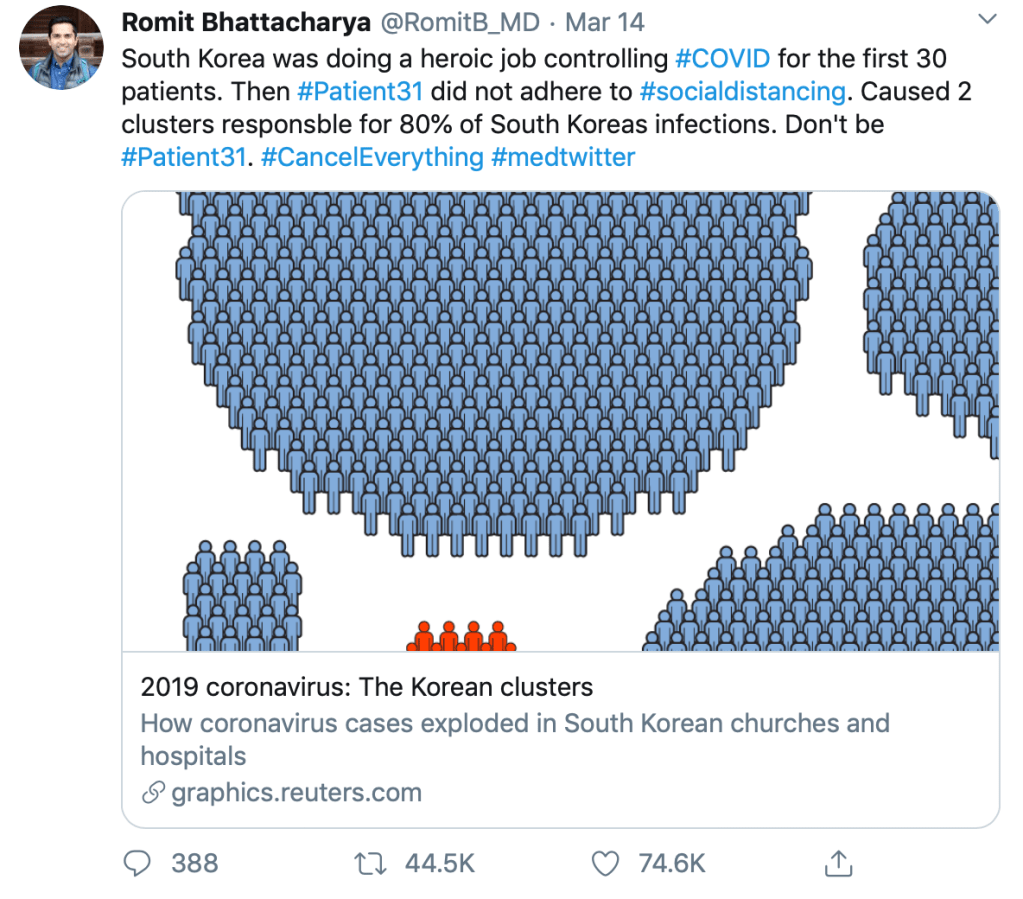
For the sake of graduation and global health, containing COVID-19 is the most important next step. This means, stay in your house if you do not absolutely need to go out, that means no bars and no parties (I know, it will be hard since we’re on “spring break”). If everyone assumes their individual role in surviving this epidemic then we may see a quicker recovery from the COVID-19 epidemic. Attached below is a tweet and article that you can read if you feel the need to leave your house and go about your day as normal.
Tweet 3/14/2020
4/5/2020 COVID-19 Update. Are we on the way to a vaccines and antivirals?
Well, one thing that has changed about COVID-19 is that the virus has officially been named SARS-CoV-2, as the second virus known to cause severe acute respiratory syndrome (SARS). As the number of cases continues to rise in the US and hospitals grow more and more overwhelmed with patients seeking testing and treatment, researchers are working hard to develop a preventative vaccine and/or treatment for the virus. There is bound to be some wait-time for these to be developed, as scientists must first gain a detailed understanding of the pathogenesis of the virus. Not only does SARS-CoV-2 share a name with 2003 SARS-CoV, but the two viruses are believed to share a receptor protein to which they attach, called ACE-2. Studying this protein could be effective against preventing COVID-19 since it offers a possible way to block the virus from entering its target cells.
This is exactly what is being done by an international team led by the University of British Columbia’s (UBC) Dr. Josef Penninger working to develop antivirals against COVID-19. They are focusing on ACE-2 and how they can use this receptor to lessen the viral load in severe cases. They have developed a drug called hrsACE2, or human recombinant soluble angiotensin-converting enzyme 2. Using stem cell-derived models of blood vessels and kidneys, which have both been shown as target cells of the virus, the team at UBC was able to show that SARS-CoV-2 infected these cells at a much lower rate when treated with hrsACE2 (ScienceDaily, n.p.) The mechanism of this drug is basically binding the virus before it can bind to actual ACE2 on target cells and infect them. The team is working on moving towards clinical trials soon, but the study is promising.
As for the vaccine, this is another important key to stopping the epidemic. Moderna, a biotechnology company based in Cambridge, and the National Institute of Health have partnered to find a COVID-19 vaccine and are currently underway with phase 1 human trials and on track to phase 2 around spring or early summer. Their trials are aimed at “hijacking” mRNA to carry a copy of the viruses genome and induce the production of antibodies against the virus (Harbert, n.p.) The company has no approved vaccine to date, but they had been working on a vaccine against MERS, another type of coronavirus, so they had a headstart to developing their vaccine, as MERS is genetically similar to SARS-CoV-2. Even if this sounds good, widespread distribution of the vaccine is still expected to come no sooner than September of 2020, which is why social distancing and taking individual precautions are so important right now during the height of the US pandemic.
If you have ever heard of the “anti-vax” movement, it is likely that you have also heard of Andrew Wakefield, or rather his controversial article linking autism to the MMR vaccine. This study, despite having aspects described as “utterly false” by editor Richard Horton, is actually still the basis of most anti-vaxxer arguments. The article was retracted in 2010 by The Lancet, and Wakefield was investigated and ultimately removed from the UK medical registrar. His study is considered controversial and unethical by many, as it exploited the hopes of desperate parents and called for unnecessary medical procedures to be performed on vulnerable children. In-depth investigation into the study and the families involved has revealed that there were several aspects of the paper that were severely skewed and misrepresented.
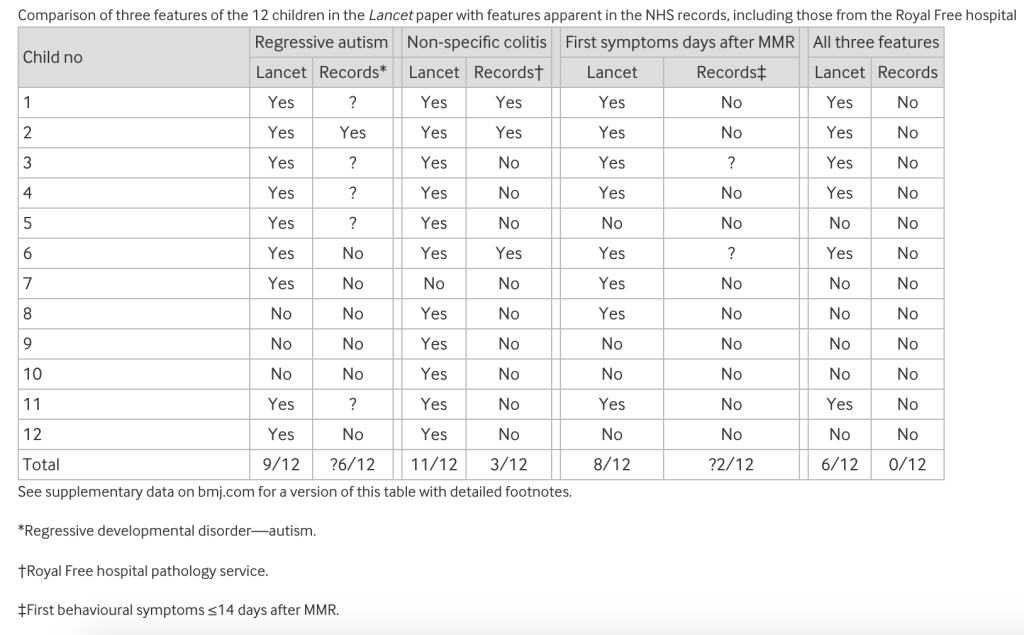
Perhaps the biggest issue with his study was the size of his cohort, which consisted of 12 patients, 11 boys and 1 girl, aged 3-9. As we all know, sample size matters! Drawing conclusion from such a small group is much less accurate than using both random and large sample sizes. Wakefield also included no control group in his study, which would have potentially changed the results since, in fact, the observations made were all due to chance. Another flaw of the study is that it was not double blind, meaning the investigators knew who the patients were, their specific diagnoses, and the results of the examinations that were done on them, so misrepresenting the results in favor of the conclusion was more likely to happen. Perhaps the biggest issue, though, was how we found his patients. They were all referred to him as gastroenterology patients, the symptoms listed as “pain, weight loss, fever, and mouth ulcers,” as well as a concern about the child’s behavioral issues, which is what Wakefield was said to be studying. Thus, due to how the group was selected, they were bound to find a connection between autism, digestive issues, and MMR (Deer, n.p.). Just to grasp the full extent of Wakefield’s deception, take a look at this chart made by Brian Deer, a British reporter who conducted one of the many in-depth investigations into Wakefield and his study.
Since the articles publishment, several scientists have taken on the MMR/autism claim and studied it for themselves, but none has been able to verify Wakefield’s claims, since his links between the two are simply correlation, not causation. So, if you are wondering why Wakefield would publish such a paper, this is where it gets interesting (and super unethical). Investigations showed that there were several conflicts of interest. He was inclined to find a link between MMR and autism because he was reportedly seeking a patent of his own for a prophylactic measles vaccine, for which he completely altered the information to make it seem as though the children had reportedly experienced their first behavioral symptoms within a mean interval of 6 days after their exposure to the MMR vaccine (Deer, n.p.). Along with this, he also had a relationship with Richard Barr, a lawyer involved with some of the parents in the studies who were seeking legal action against vaccine manufacturers. His research was largely funded by Barr, from whom he received several payments and patient referrals for the study (Deer, n.p.).
The disastrous effects of Wakefield’s paper were not only seen almost immediately after it was published, but we are still seeing them all over the world today with children contracting completely preventable, life-threatening diseases. In 2003, 5 years after the paper was published, MMR vaccines in the UK drastically declined from over 90% to 79% (Matthews-King, n.p.). But, this isn’t a problem because of herd immunity, right? Well, health professionals emphasize that a vaccination rate of 95% is needed to “effectively protect” a community (Haberman, n.p.). Measles, specifically, was thought to have been eradicated, but the rise of the anti-vaxx movement has led to nationwide outbreaks. In 2006 a 13-year old boy became the first UK death from measles for 14 years and that same year, measles incidence in England and Wales was the highest it had been for 20 years (Matthews-King, n.p.). In 2014 alone, the CDC reported 644 cases across 27 US states (Haberman, n.p.). This just goes to show how important vaccines are not just to maintaining our own health, but to protect our communities and individuals vulnerable to diseases. The impact it has had on the world is genuinely dangerous and I hope that we soon find a way to combat and remedy the effects of Wakefield’s false study.
My name is Jaylin Polanco and I am a senior! Although I super excited and ready to graduate this spring, I am looking forward to what this class has to offer. I have heard both good and bad things about this class, but I know we will have a great semester!
I am majoring in Biology with a minor in Neuroscience and plan to eventually attend school to become a Physician Assistant. I am currently a certified nurse assistant and working towards getting my patient hours for PA school. I have also worked as a waitress & bartender for about 3 years now, although I am looking to work as a CNA full time soon.
My hobbies include:
Volleyball
Playing with dogs
(More recently) cooking
going to the gym (this isn’t so much a hobby as a good habit that I have recently gotten into, but I enjoy it very much)
Reading
I am currently reading We We’re Eight Years in Power by Ta-Nehisi Coates
I am looking forward to the rest of the semester and learning of all the tiny microbes we are exposed to every day, even thought it may be slightly creepy. I will finish my blog with a picture of my boyfriend’s dog, Jax. Enjoy!






 Jaylin’s Thoughts: Microbiology